
For many internationally qualified nurses, working in Australia, the UK, or another developed healthcare system represents a significant career milestone. The pathway to registration, however, involves more than submitting qualifications and passing an English test. In many countries, you will also need to demonstrate that you can actually perform nursing skills safely and effectively in a clinical setting.
That’s what the OSCE is designed to assess. This guide explains what the OSCE is, why it matters, what it tests, and how to prepare for it — so you know exactly what to expect and how to give yourself the best chance of passing.
What is OSCE?
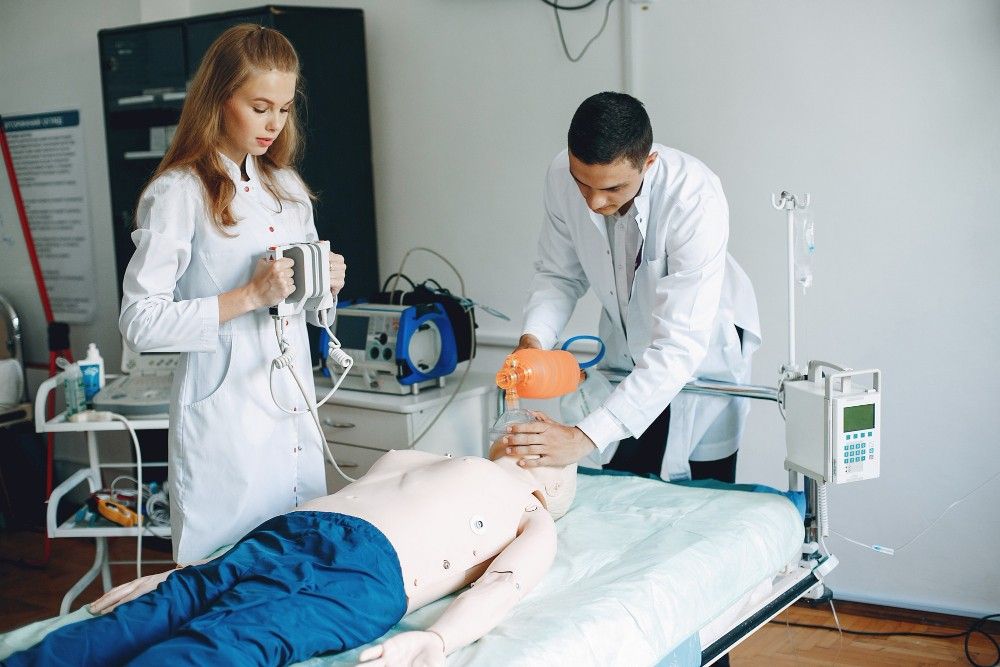
OSCE stands for Objective Structured Clinical Examination. It is a practical, performance-based assessment that evaluates a nurse’s clinical competence in a simulated healthcare environment. Rather than answering questions on paper or a screen, you are observed performing real nursing tasks — taking vital signs, administering medication, communicating with a patient, responding to a deteriorating patient — across a series of timed stations.
The word “objective” is key. Every candidate is assessed against the same criteria at the same stations, which means the evaluation is consistent, fair, and based on observable performance rather than subjective impression. The OSCE was designed to answer one question: can this nurse deliver safe, effective, patient-centred care?
Why is OSCE Important for International Nurses?
Healthcare standards, clinical protocols, and patient communication expectations vary between countries. A nurse trained and registered in the Philippines, India, or Nigeria may be highly skilled, but the registration authority in Australia or the UK needs to confirm that those skills meet local standards before granting registration.
The OSCE provides that confirmation. It demonstrates clinical competency in a controlled, observable way. It ensures patient safety by verifying that nurses can perform core clinical tasks correctly and safely. It also gives candidates an opportunity to familiarise themselves with the clinical environment, terminology, and professional expectations of the country they plan to work in.
For many internationally qualified nurses, passing the OSCE is the final — and most practically demanding — step before full registration.
Who Needs to Take the OSCE?
Eligibility requirements vary by country and registration pathway, but the OSCE is most commonly required for internationally qualified nurses (IQNs) and overseas registered nurses applying for nursing registration in countries such as Australia, the UK, and Ireland.
In Australia, the Australian Health Practitioner Regulation Agency (AHPRA) requires internationally qualified nurses who do not meet the standard qualification assessment criteria to complete a supervised practice program, which may include an OSCE component. In the UK, the Nursing and Midwifery Council (NMC) requires overseas nurses to pass the Objective Structured Clinical Examination as part of the Computer Based Test (CBT) and OSCE registration pathway.
If you are applying through a specific registration route, confirm with the relevant nursing regulatory authority whether an OSCE is required and what format it takes in your target country.
What Skills Are Assessed in the OSCE?
The OSCE tests three broad domains of nursing competence.
Clinical Skills cover the technical, hands-on tasks that nurses perform daily: patient assessment, vital signs monitoring, medication administration, wound care, and infection prevention and control. Examiners are looking for correct technique, safe practice, and evidence-based care.
Communication Skills assess how you interact with patients, families, and colleagues. This includes explaining procedures clearly, providing health education, conducting clinical handovers, and documenting care accurately and completely. Professional, empathetic, and patient-centred communication is assessed throughout every station.
Professional Practice encompasses the broader elements of nursing competence: clinical reasoning, ethical decision-making, time management, and patient safety behaviours — including hand hygiene, infection control, and medication safety checks. These are not assessed only at dedicated stations; they are observed across the entire examination.
OSCE Exam Format Explained
The OSCE is structured around multiple assessment stations. At each station, you are given a specific clinical scenario and a set amount of time — typically 10 to 15 minutes — to perform the required task. An examiner observes your performance and marks you against a standardised checklist.
Stations are designed to reflect real-world nursing situations. You may be assessed on some or all of the following:
- Medication administration and safety checks
- Patient admission assessment
- Wound management and dressing
- Clinical handover using ISBAR (Identify, Situation, Background, Assessment, Recommendation)
- Communication scenarios — breaking difficult news, explaining a procedure, educating a patient
- Emergency response — recognising and responding to a deteriorating patient
- Falls risk assessment
- Infection control procedures
The number of stations varies depending on the registration authority and the specific examination format. Some OSCEs involve six to eight stations; others may include more. Each station is self-contained — your performance at one station does not affect the next — so a difficult station does not have to derail your overall result.
Common OSCE Scenarios for Nurses
Understanding the types of clinical scenarios you are likely to encounter helps you prepare with purpose. Common OSCE scenarios include:
- Deteriorating patient assessment — recognising early warning signs and escalating appropriately
- Post-operative care — monitoring, pain assessment, and wound inspection
- Diabetes management — blood glucose monitoring, insulin administration, patient education
- Medication errors — identifying an error, taking appropriate action, documenting and communicating it
- Falls risk assessment — completing a structured assessment and implementing preventive measures
- Infection control — correct donning and doffing of PPE, hand hygiene technique
- Patient discharge planning — coordinating care, communicating instructions clearly to the patient
- Mental health communication — therapeutic communication, de-escalation, empathetic listening
In every scenario, safe practice and clear communication are assessed alongside technical skill. A flawless clinical procedure performed without explaining it to the patient will not score as well as one performed correctly with appropriate patient interaction throughout.
OSCE Assessment Criteria
Knowing what examiners are looking for allows you to structure your performance deliberately rather than relying on instinct alone.
Clinical Competence: Are you following the correct procedure? Is your practice evidence-based and safe? Are you completing every step without being prompted?
Communication: Are you introducing yourself and explaining what you are about to do? Are you speaking clearly and at an appropriate level for the patient? Are you listening actively and responding to what the patient says?
Documentation: Are your written records accurate, complete, and professionally formatted? Do they meet legal and professional standards?
Patient Safety: Are you performing hand hygiene at the correct moments? Are you checking patient identity before administering medication? Are you using PPE appropriately? Patient safety behaviours are observed throughout — not just at dedicated stations.
OSCE vs NCLEX — What’s the Difference?
International nurses often encounter both NCLEX and OSCE as part of their registration journey, and it’s important to understand what each one tests.
| Feature | OSCE | NCLEX |
|---|---|---|
| Focus | Practical clinical skills | Theoretical nursing knowledge |
| Format | Observed clinical stations | Computer-based test |
| Assessment | Hands-on performance | Multiple-choice questions |
| Communication assessed | Yes, throughout | Limited |
| Clinical skills assessed | Yes | No |
NCLEX tests what you know. OSCE tests what you can do. Some registration pathways require both. If you are required to sit NCLEX before OSCE, use your NCLEX preparation to solidify your theoretical knowledge, then shift your focus to practical application when preparing for the OSCE.
How to Prepare for the OSCE Exam
Step 1: Understand the assessment criteria. Before practising any clinical skills, review the competency standards that apply to your specific OSCE. Know what examiners are looking for at each type of station and what constitutes a pass or fail in your registration authority’s marking framework.
Step 2: Practise clinical skills under observation. Medication administration, patient assessment, wound care, and vital signs monitoring all need to be practised with an observer present — not just rehearsed in your head. Being watched while performing clinical tasks is a skill in itself, and the OSCE environment requires it.
Step 3: Work on your communication structure. Every interaction should begin with an introduction, explanation, and consent. Practise narrating what you are doing as you do it. Practise active listening responses. Practise giving clear health education in plain language.
Step 4: Attend mock OSCE sessions. This is the single most effective preparation strategy. Mock OSCEs simulate the real exam format — timed stations, an examiner observing you, a simulated patient responding to you — and reveal weaknesses that solo practice cannot expose. The feedback you receive from a mock OSCE is significantly more useful than any study guide.
Step 5: Review infection control protocols thoroughly. Hand hygiene and infection control are assessed at virtually every station. Candidates who miss hand hygiene steps lose marks repeatedly across multiple stations. Practise the correct moments for hand hygiene until they are completely automatic.
Common Mistakes That Cause Nurses to Fail OSCE
Missing safety checks. Failing to check patient identity before medication administration, or skipping a step in a clinical procedure, results in immediate mark deductions at that station.
Poor hand hygiene. Not performing hand hygiene at the correct moments — before patient contact, before a clean or aseptic procedure, after body fluid exposure, after patient contact — is one of the most consistently costly errors.
Inadequate communication. Performing clinical tasks without explaining them to the patient, or failing to respond to patient concerns, reduces marks significantly. The OSCE is not just a skills test — it is a communication test too.
Incomplete documentation. Leaving fields blank, using incorrect terminology, or producing records that lack the required information affects your score at documentation stations.
Poor time management. Running out of time before completing the required tasks at a station means those tasks go unassessed and unmarked. Practise completing each task type within the time limit.
Memorising scripts rather than understanding them. Candidates who memorise responses rather than understanding the underlying reasoning often freeze when the simulated patient says something unexpected. The OSCE is a dynamic assessment — adaptability matters.
Benefits of Professional OSCE Training
Preparing for the OSCE alone is possible, but structured professional training significantly improves outcomes. A quality OSCE training programme provides expert guidance from experienced nurse educators who understand the marking criteria; realistic mock OSCE stations that replicate the actual exam environment; individual feedback on performance — both clinical technique and communication; structured coverage of every competency area; and targeted support for the specific weaknesses identified in mock sessions.
Nurses who complete structured training programmes consistently report higher confidence levels and better first-attempt pass rates than those who prepare independently.
How Long Does It Take to Prepare for OSCE?
Preparation time varies depending on your existing clinical experience and how recently you have been practising.
4 to 6 weeks is typically sufficient for experienced nurses with recent, active clinical practice who are already familiar with evidence-based protocols and simply need to adapt to the OSCE format and local clinical standards.
8 to 12 weeks is more appropriate for nurses who need to refresh specific clinical skills, build confidence in English-medium communication, or get used to performing under observation.
3 to 6 months suits candidates who are balancing full-time work with exam preparation, or who identify significant gaps in specific competency areas during early mock testing.
Whatever timeline you are working with, begin with a mock OSCE as early as possible. The feedback from that first session will shape your entire preparation plan more effectively than any amount of unsupervised practice.
Career Opportunities After Passing OSCE
Passing your OSCE is the gateway to full nursing registration in your target country, and registration opens a wide range of career pathways.
Internationally qualified nurses who complete registration in Australia, the UK, New Zealand, or Ireland can access hospital and community healthcare employment with significantly higher earning potential than in many home countries; structured graduate and transition-to-practice programs; career progression into specialist, senior, and leadership nursing roles; long-term residency and migration pathways; and a stable, professionally rewarding career in a well-resourced healthcare system.
For many nurses, the OSCE is the final step before a career and life transformation. It is demanding, but it is achievable with the right preparation.
Frequently Asked Questions About OSCE
Is OSCE difficult? The OSCE is challenging, but it is designed to assess practical competence — not to trick you. Nurses who prepare thoroughly, practise under realistic conditions, and understand the assessment criteria consistently pass. The difficulty lies in performing confidently under observation, which is why mock OSCE practice is essential.
How many stations are there in an OSCE? This varies by registration authority. Most nursing OSCEs involve between six and ten stations. Confirm the specific format with your regulatory body.
What happens if I fail OSCE? Most registration authorities allow candidates to retake the OSCE if they do not pass. The number of permitted attempts and any waiting periods vary. If you are unsuccessful, use the feedback from your result to target your preparation before your next attempt.
Can I retake the exam? Yes, in most cases. Check the specific retake policy of the registration authority in your target country.
How long is each OSCE station? Station length varies, but most nursing OSCE stations run for 10 to 15 minutes. Some examination formats include shorter preparation stations before each assessed station.
How should I prepare for OSCE? Understand the assessment criteria, practise clinical skills under observation, develop structured communication habits, attend mock OSCE sessions, and review infection control and patient safety protocols until they are automatic.
Conclusion
The OSCE is one of the most practically demanding steps in the international nursing registration journey — and one of the most important. It exists to ensure that every nurse who registers in a new country can deliver safe, competent, patient-centred care from day one. That’s a standard worth preparing for thoroughly.
Success in the OSCE comes down to three things: strong clinical skills performed correctly and safely, clear and empathetic communication throughout, and thorough preparation that includes realistic mock assessments. Begin early, seek structured guidance, and approach every mock session as seriously as the real exam.
Your OSCE result is not just a registration requirement. It is confirmation that you are ready to practise at the highest standard — and that is something worth working for.
Ready to Pass Your OSCE Exam?
Our OSCE Training Programme gives you everything you need to prepare with confidence — expert nurse educators, realistic mock OSCE stations, clinical skills workshops, one-on-one feedback sessions, and communication skills coaching built around exam requirements.
Contact us today and take the next step toward your international nursing career.